In this week's podcast, Melissa del Bosque and Geographer Dugan Meyer explain how the Border Chronicle's new project, Wall Watch, helps residents document and understand the massive construction project underway at the U.S.-Mexico border.
Countering negative narratives with an event that honors interconnectedness and subverts the border in Agua Prieta/Douglas, and a contested hotel--in the heart of the Rio Grande Valley--that is of great importance for Mexican American civil rights.
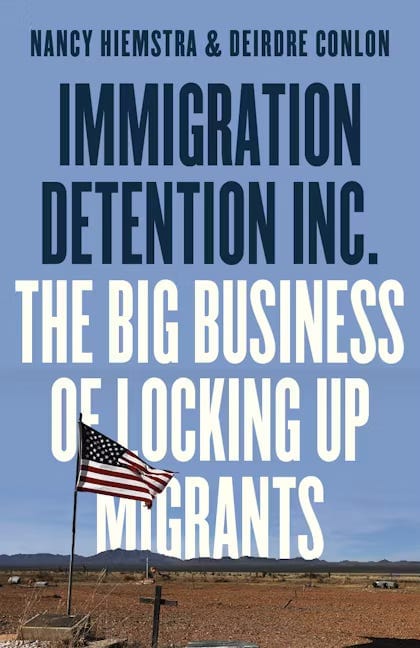
This book comes at a crucial time as the Trump administration attempts to carry out a mass deportation plan that will be financed by an estimated $45 billion budget, via the One Big Beautiful Bill Act.
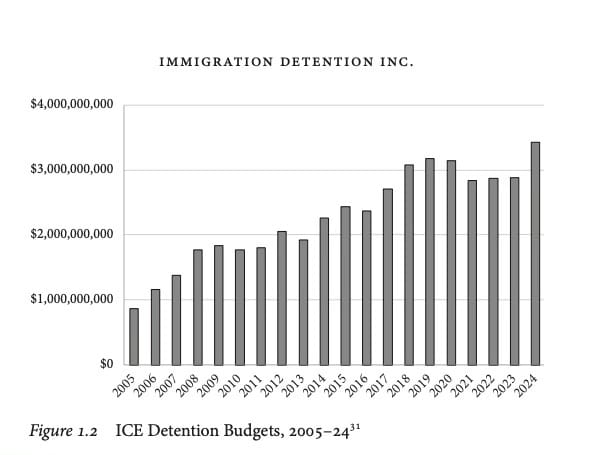
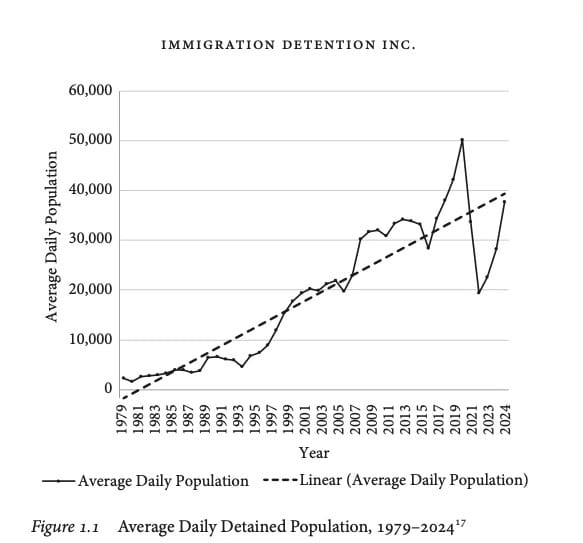
We discuss all of this: the billions made not only by major prison companies like Geo Group and CoreCivic but also by subcontracted services such as food, medical care, and commissary. The authors highlight that substandard food and health services are part of the business model. We discuss the financial dependencies that local governments have developed through their revenue-sharing agreements with ICE. Additionally, we examine the rapid growth of the detention industry—from 7,000 people in the early 1990s to 60,000 today—and how this growth has accelerated in the last eight months under Trump.
To be noted, the daily population has reached 60,000 this year, a significant jump from the end of 2024.
Finally, the authors suggest solutions. “Chip away that detention is effective or necessary … this is really a false narrative,” Hiemstra says, and “peel away what makes detention profitable, and peel away the ability to make money off it.”
In this week's podcast, Melissa del Bosque and Geographer Dugan Meyer explain how the Border Chronicle's new project, Wall Watch, helps residents document and understand the massive construction project underway at the U.S.-Mexico border.
A vivid depiction of what has been happening during the last eight weeks of resistance against border wall construction in southern Arizona’s San Rafael Valley.
Wall Watch combines geospatial mapping, archival research, and community participation to provide the public with an accurate, continually updated record of border wall construction along nearly 2,000 miles of the international border.
Worried about the future of democracy in the United States? Look to Indigenous histories; they have much to teach us about the struggle between liberty and empire.